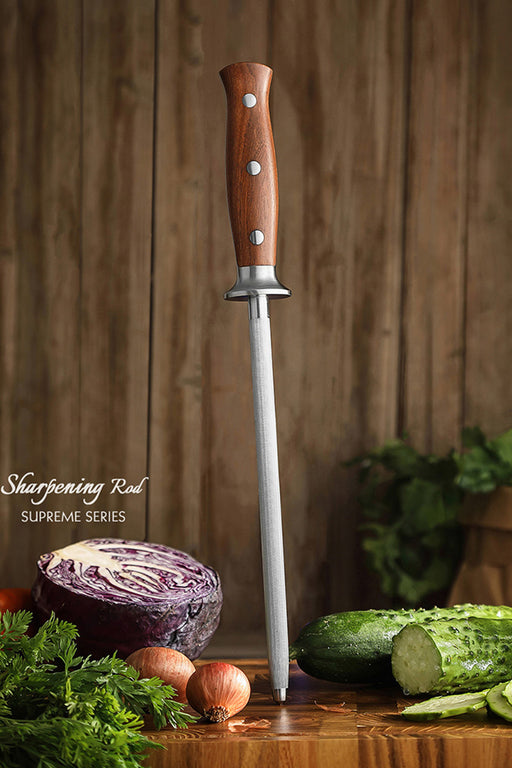
Maintaining the sharpness of kitchen knives is essential for ensuring efficient and safe cooking practices. One tool that stands out in achieving this goal is the knife sharpening rod, also known as a honing rod. This vital kitchen tool helps keep blade edges crisp and ready for action, prolonging the life of the knives and enhancing their performance. Understanding the top techniques for using a knife sharpening rod can transform the way one handles knife maintenance.
Understanding the Basics of a Knife Sharpening Rod
Before diving into the techniques, it is crucial to grasp what a knife sharpening rod is and how it functions. A honing rod is typically made from steel, ceramic, or diamond-coated materials, each offering unique benefits.
- Steel Rods: Known for their durability and ability to align edges effectively.
- Ceramic Rods: Suitable for honing and sharpening simultaneously due to their abrasive surface.
- Diamond Rods: Ideal for restoring very dull knives, thanks to their coarse, gritty texture.
Understanding the material and purpose of a honing rod is the first step in mastering its use. Discover expert strategies here.
Setting Up for Success
Choosing the Right Rod
Selecting the appropriate honing rod depends on the type of knives being used and their current state. Consider the following:
- For general maintenance, a steel rod works well with most kitchen knives.
- If sharpening is required, a ceramic or diamond rod might be more suitable.
- Consider the length of the rod; it should be longer than the blade of the knife.
To make an informed decision, learn about our tailored solutions.
Setting the Angle
One of the most critical aspects of using a knife sharpening rod is setting the correct angle. Here?s how to do it:
- Hold the knife at an angle of 15 to 20 degrees relative to the rod.
- Maintaining consistency in the angle is key to effective honing.
- A narrower angle (15 degrees) is ideal for fine, delicate knives, while a wider angle (20 degrees) suits sturdier blades.
By following these guidelines, one can ensure precision and effectiveness in knife maintenance. Explore advanced guides and tips.
Executing the Technique
Proper Honing Motion
Executing the correct motion is vital for achieving optimal results. Here are the steps to follow:
- Place the honing rod vertically on a stable surface.
- Start at the base of the knife blade, applying light pressure.
- Draw the blade down and across the rod, completing the stroke at the tip.
- Alternate sides, repeating the motion 5 to 10 times for each side.
Consistency in the motion ensures even sharpening. Find out more about this approach.
Frequency of Use
Regular maintenance is key to knife longevity. Here are some tips on how often to use a honing rod:
- For frequent cooks, honing once a week is usually sufficient.
- For occasional use, hone before each significant cooking session.
- Remember, honing is different from sharpening and is more about maintaining the edge.
Regular honing not only keeps the knives sharp but also extends their lifespan significantly.
Conclusion
Mastering the use of a knife sharpening rod can elevate kitchen experiences by ensuring tools are always in prime condition. By selecting the right rod, maintaining the correct angle, and executing proper techniques, one can enjoy the benefits of sharp, efficient knives. For additional insights and products, explore advanced guides and tips available online. Keeping kitchen tools in top shape reflects a commitment to culinary excellence and safety.