Basement waterproofing is an essential part of home maintenance, particularly in regions prone to heavy rainfall or flooding. Water infiltration can lead to severe structural damage, mold growth, and a decrease in home value. While internal waterproofing solutions are often discussed, external basement waterproofing solutions can provide a more comprehensive defense against water intrusion. This article delves into affordable external waterproofing methods that can safeguard a basement effectively.
Understanding External Basement Waterproofing
External basement waterproofing involves techniques that prevent water from entering the basement from the outside. This method is considered more proactive than internal solutions, as it addresses the root cause of water intrusion. By managing water before it enters the structure, homeowners can protect their investments more efficiently.
Why Choose External Waterproofing?
- Addresses the problem at the source, providing a long-term solution.
- Prevents structural damage caused by water pressure against foundation walls.
- Reduces the risk of mold and mildew growth by keeping the basement dry.
For more insights into the benefits of external waterproofing, discover expert strategies here.
Affordable External Waterproofing Solutions
There are several cost-effective strategies that homeowners can employ to waterproof their basements from the outside. Here are some of the most common and effective solutions:
1. Exterior Drainage Systems
Exterior drainage systems, often referred to as French drains, are a popular choice for external waterproofing. These systems redirect water away from the foundation, minimizing the risk of water intrusion.
- Installation involves digging a trench around the perimeter of the foundation to install the drainage pipe.
- Covered with gravel and a filter fabric to prevent clogging.
- Directs water to a sump pump or a safe distance away from the property.
Learn about our tailored solutions for exterior drainage systems that suit different types of foundations and budgets.
2. Waterproof Coatings and Membranes
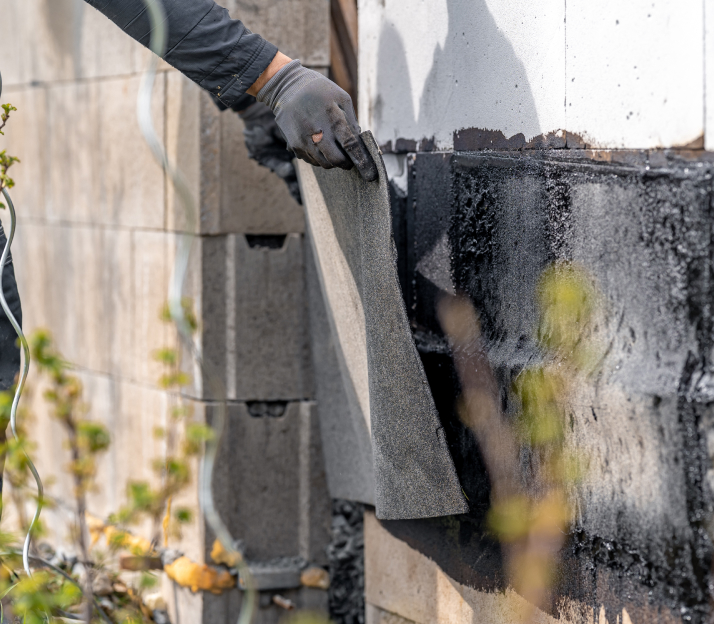
Applying a waterproof coating or membrane to the exterior walls of a basement is another effective method to prevent water seepage.
- Membranes are installed on the outer walls and serve as a barrier against moisture.
- Coatings can be sprayed or rolled on for added protection.
- Both options are relatively affordable and can be a DIY project for the handy homeowner.
For a detailed guide on applying these coatings and membranes, explore advanced guides and tips.
3. Proper Landscaping
Landscaping plays a crucial role in external waterproofing. Ensuring that the ground slopes away from the foundation can significantly reduce water pooling around the basement walls.
- Grading the soil away from the house directs rainwater away from the foundation.
- Using mulch and landscaping stones can help absorb excess water.
- Planting water-absorbing shrubs and plants around the perimeter can assist in water management.
To see how landscaping can be integrated into a comprehensive waterproofing strategy, find out more about this approach.
Conclusion
External basement waterproofing is a crucial step in protecting a home from water damage. By investing in affordable solutions like exterior drainage, waterproof coatings, and strategic landscaping, homeowners can maintain a dry and healthy basement environment. For more detailed information on various external waterproofing methods, be sure to explore advanced guides and tips available online. Taking proactive steps today can save significant time and money in the future, ensuring a safe and durable home for years to come.