Maintaining the sharpness and longevity of kitchen knives is an essential practice for anyone passionate about cooking, whether professionally or at home. An often-overlooked tool in this endeavor is the hone rod. Mastering the use of a hone rod can significantly enhance the performance of your knives, making them safer and more efficient. This article delves into the art of knife maintenance through the lens of honing, offering insights and tips to keep your blades in top condition.
Understanding the Hone Rod
The hone rod, also known as a honing steel, is a staple in any well-equipped kitchen. Its primary function is to realign the edge of a blade, correcting any bends or misalignments that occur during regular use. Unlike sharpening stones or electric sharpeners, a hone rod does not remove material from the blade but instead maintains its edge. This makes it an indispensable tool for preserving the life of your knives.
Different Types of Hone Rods
When selecting a hone rod, it’s essential to understand the variety available. Each type offers unique benefits and is suited for different knife styles and materials:
- Steel Hone Rods: These are the most common and are known for their durability. They are suitable for most stainless steel knives.
- Ceramic Hone Rods: Ideal for harder knife steels, ceramic rods are gentle on the blade while providing a fine finish.
- Diamond Hone Rods: Coated with diamond dust, these rods are effective for realigning and slightly sharpening the edge, perfect for very dull knives.
Explore advanced guides and tips to choose the right hone rod for your knife collection.
The Technique of Honing
Proper technique is crucial when using a hone rod to ensure the best results. Here is a step-by-step guide:
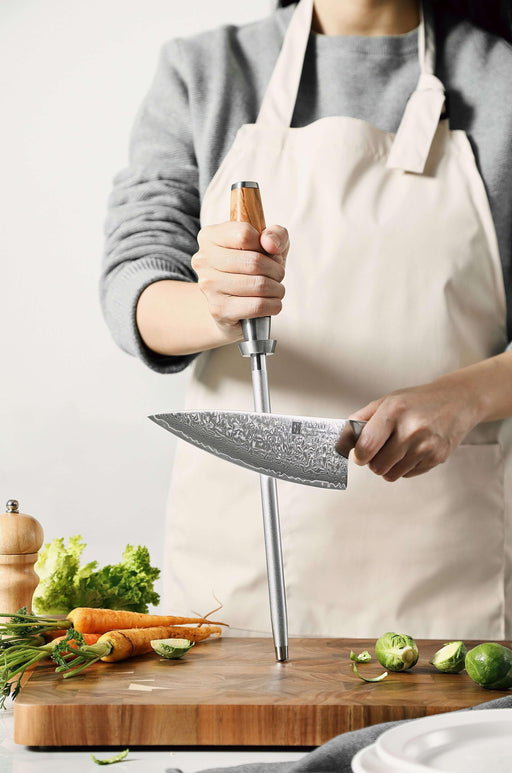
- Secure the Hone Rod: Hold the hone rod vertically with the tip resting on a non-slip surface. The rod should be stable and positioned away from your body.
- Position the Knife: Hold the knife at a 15 to 20-degree angle to the rod. The angle can vary depending on the design of the knife.
- Draw the Knife: Starting at the heel of the blade, draw the knife down and across the rod, maintaining the angle. Repeat on both sides of the blade.
- Consistency: Perform 5 to 10 strokes on each side, using steady and even pressure.
For those new to honing, find out more about this approach to ensure precision and safety.
Benefits of Regular Honing
Incorporating regular honing into your knife maintenance routine offers several advantages:
- Prolonged Knife Life: By maintaining the edge, honing reduces the frequency of sharpening, thus extending the lifespan of the knife.
- Improved Safety: A well-honed knife is less likely to slip, reducing the risk of accidents in the kitchen.
- Enhanced Performance: Sharp knives require less force to cut, allowing for more precise and efficient work.
Discover expert strategies here to integrate honing into your knife care routine effectively.
Conclusion
Mastering the art of using a hone rod is a skill that pays dividends in the form of safer, sharper, and longer-lasting knives. By understanding the types of hone rods available and employing the correct technique, anyone can elevate their culinary experience. For those seeking to deepen their knowledge, learn about our tailored solutions and ensure your knives are always in peak condition.